As an Amazon Associate, we earn from qualifying purchases. Some links may be affiliate links at no extra cost to you. Although our opinions are based on curated research, we haven't used these products. Articles generated with AI.

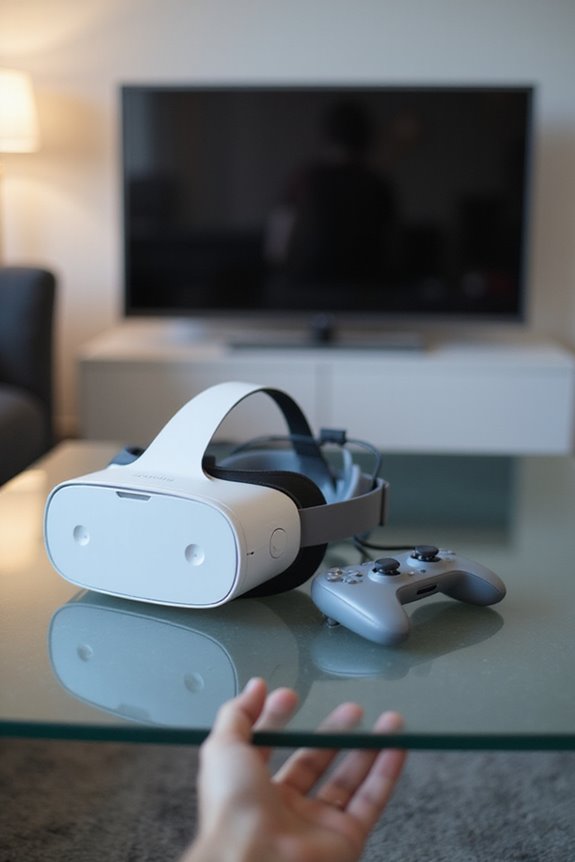
Do You Need A Gaming System For Meta Quest 2

You’ll definitely want a gaming system for the Meta Quest 2 to access its full potential. The minimum specs include an Intel Core i5-4590 or AMD Ryzen 5 1500X, along with an NVIDIA GTX 970. However, if you can swing it, I’d recommend an Intel i7 or Ryzen 7 for smoother performance. Good RAM is also key, with 16 GB being the sweet spot for multitasking. Stick around, and you’ll find tips on optimizing your setup and budget-friendly options.
Key Takeaways
- Meta Quest 2 can operate independently but enhances performance when connected to a powerful gaming system.
- A gaming PC with at least an Intel i7 or AMD Ryzen 7 is recommended for optimal performance.
- Minimum requirements include an Intel Core i5-4590 or Ryzen 5 1500X for basic VR experiences.
- Upgrading to a dedicated graphics card like the NVIDIA GeForce RTX series improves visual quality and immersion.
- More RAM (16 GB or above) is advisable for smoother multitasking and better VR performance.
Understanding VR System Requirements
You may be interested
When it comes to understanding VR system requirements, it’s essential to recognize that your setup can greatly influence your experience. While the Meta Quest 2 can operate independently for basic VR, a powerful PC opens up a world of advanced features, like passthrough video integration. You’ll want a solid CPU, ideally something like an Intel i7 or AMD Ryzen 7, paired with a capable graphics card, like the Nvidia RTX series.
If you’re aiming for smooth performance, consider at least 8 GB of RAM, but more is always better. Operating on Windows 10 or above is a must for PC-based experiences. Your choice of components will notably affect how immersive your VR journey can be, so choose wisely!
Minimum System Requirements for Meta Quest 2
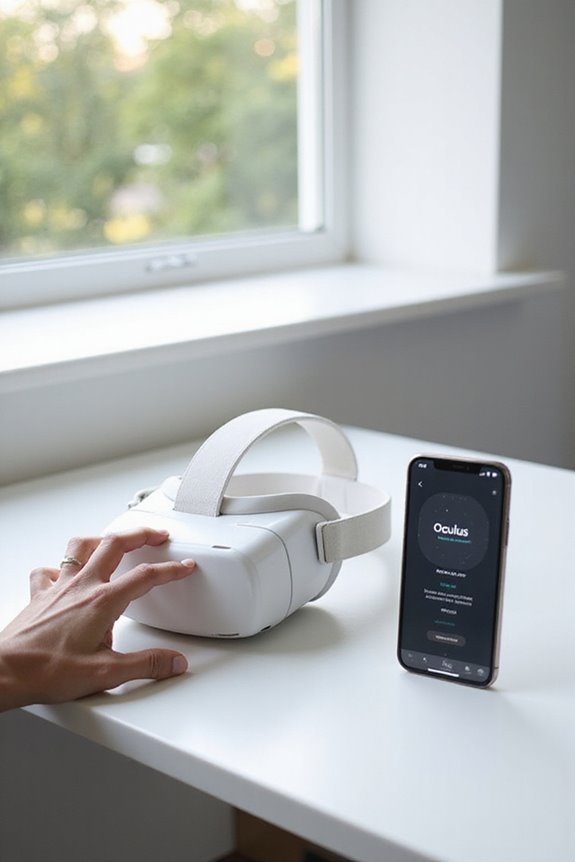
If you’re looking to optimize your experience with the Meta Quest 2, knowing the minimum system requirements is a good place to start. You’ll need at least an Intel Core i5-4590 or AMD Ryzen 5 1500X CPU, along with a graphics card like the NVIDIA GeForce GTX 970 or AMD Radeon RX 6000 Series. Don’t forget to have a minimum of 8 GB of RAM and run Windows 10 or later. These specs are essential for basic VR experiences and passthrough features. It’s wise to double-check compatibility, as not all hardware plays nicely together. Keep in mind, while these are the minimums, a bit more power can make your VR journey all the more enjoyable.
Recommended Products

Compatible with Meta Quest & Pico Headsets: The VR link cable is compatible with Meta Quest 3S / Quest 3 / Quest 2 / Quest Pro / Pico 4. Connect your headset to a gaming PC to unlock SteamVR and PC VR content for a stable, immersive wired experience. Note: This cable is NOT for charging—please do not use it to charge your headset!
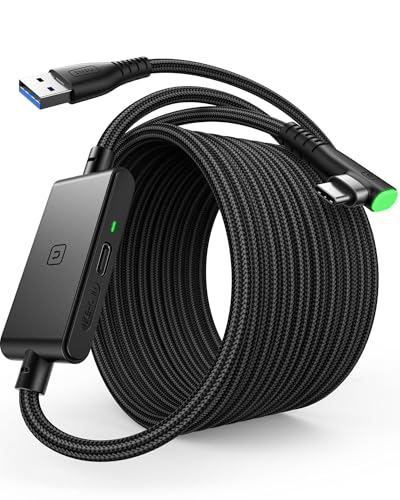
[Designed for Oculus Quest 3/2/Pro] Our 2023 version features a separate USB-C charging port, enabling rapid 3A power delivery for uninterrupted gameplay. Use with a PD/QC fast adapter for optimal charging speed. Please note: This is a VR link cable and DO NOT use it to charge your phone, tablet, laptop, etc.

No Data Speed Drop Even When Hard Twisted: The kink-resistant, braided exterior and internal twisted-pair structure work together to prevent performance loss, ensuring consistently stable USB 3.0 data transfer speeds up to 5Gbps through intense bending and daily wear
Recommended Specifications for Optimal Performance
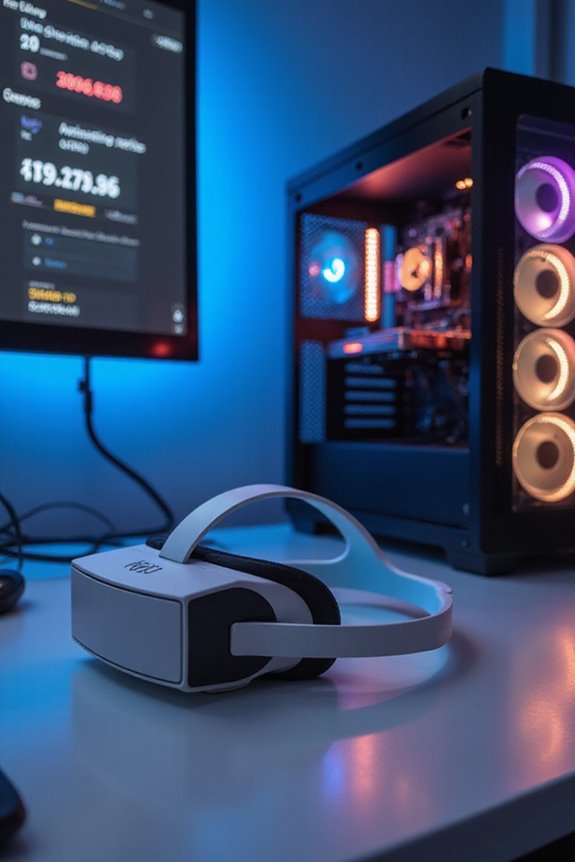
To truly enjoy the immersive experience that the Meta Quest 2 offers, opting for recommended specifications can make a significant difference. I highly suggest using an Intel i7 or AMD Ryzen 7 processor, as they provide strong performance. Pair that with an NVIDIA GeForce RTX 20 Series or AMD Radeon RX 6000 Series graphics card for stunning visuals. Don’t forget about RAM; 16 GB or more guarantees smooth multitasking, while at least 3 GB of dedicated VRAM is essential for rendering. A fast NVMe SSD is also a must for quick loading times. Finally, running Windows 10 or 11 keeps everything compatible and secure. Trust me, these specifications will elevate your VR experience to new heights.
Recommended Products

Compatible for Quest 3S/3/2/Pico 4 Link Cable- The link cable connects Oculus to a gaming PC, giving you access to a wide range of Oculus Rift games and Steam VR games, while simultaneously powering the headset. You can enjoy the vast and growing selection of PC VR games.

Premium Materials and Accessories: The Amzdm Face Pad for Meta Quest 2 is made with high-quality PU leather for enhanced comfort and durability. It includes a PU Leather Foam Replacement (standard) and a PU Leather Foam Replacement (comfort) that provide a soft and sweatproof experience. This All in One set also comes with a removable nose guard, lens cover, a pair of thumbsticks covers, 5 pcs disposable eye covers, Velcro, and a cloth cleaning accessory for added convenience.

【Reduce facial pressure】Adopt the gravity-balanced and distributed design,this elite strap replacement for oculus quest 2 makes its gravity evenly distributed in different positions of the head,further reducing facial pressure,the back wing-shaped wide bracket can offer larger head support than original while preventing slippage,it can be freely adjusted to the most comfortable state,making your device fit your head better,increasing your gaming immersion.
Importance of Hardware Upgrades
Upgrading your hardware can greatly enhance your experience with the Meta Quest 2, especially as technology continues to evolve. For instance, recent software updates have boosted CPU performance by up to 26% and GPU speed by 19%, making gameplay smoother and visuals crisper. With the Quest 3’s Snapdragon XR2 Gen 2 processor, you can see a significant jump in graphical performance, about 2.5 times that of Quest 2.
While the Quest 2 offers a solid experience, more RAM and better display specs in newer models improve multitasking and visual clarity. Remember, these upgrades don’t just make things look better; they create a more immersive experience. So, if you want to stay ahead, considering hardware upgrades is definitely worth it.
Assessing System Compatibility
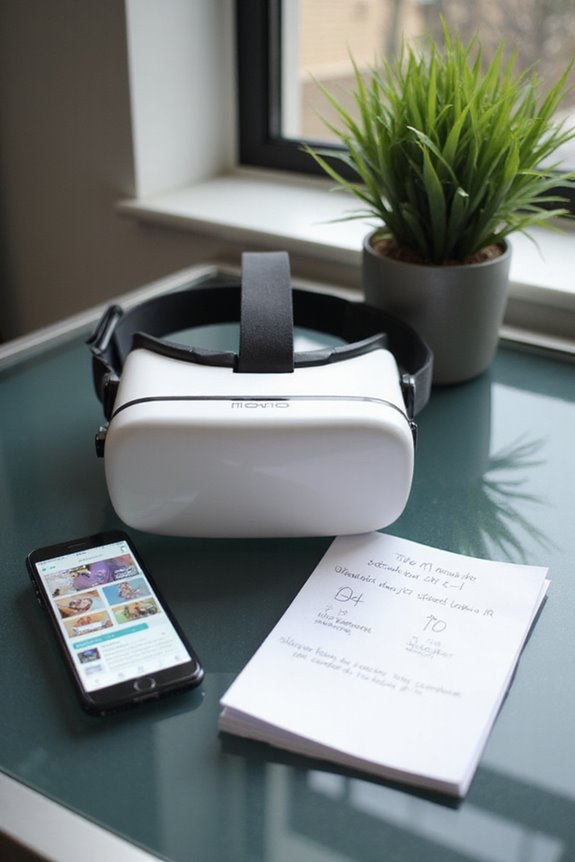
When you’re looking to get the most out of your Meta Quest 2, evaluating system compatibility becomes a key part of the process. First off, you’ll want to check your CPU—aim for at least an Intel Core i5-4590 or AMD Ryzen 5 1500X. A stronger processor really enhances your VR experience by handling complex tasks and reducing lag.
Next, don’t overlook your GPU; the minimum requirement is an NVIDIA GTX 970 or AMD Radeon 400 Series. A higher-end graphics card like the RTX 20 Series can make a world of difference in performance. Finally, make sure your PC runs on Windows 10 or 11, and always keep your drivers updated. Trust me, you’ll appreciate the smoother performance!
Budget Considerations for Building or Upgrading
Building or upgrading a gaming system for your Meta Quest 2 can feel a bit overwhelming, especially with all the costs to take into account. You’ve got to reflect on CPUs like the Intel Core i5-4590 or Ryzen 5 1500X for minimum performance, but I’d suggest aiming for an i7 or Ryzen 7. The GPU is essential too; while a GTX 970 meets the minimum, stepping up to an RTX 20 Series or RX 6000 Series really enhances your experience. Don’t forget about RAM; 8 GB is a must, but more can improve multitasking. If you’re on a budget, used components can save some cash. Just remember, investing wisely in key areas can make a significant difference in your VR journey.
Recommended Products

✔ CUSTOM HEADPHONES - 3.5mm custom-length cable designed for the Oculus Quest 2 and Quest 3 gaming headset, Provides minimal latency for optimal realism for optimal realism.

High-Speed Link Cable: VR Cable connects your VR device to your gaming PC,5Gbps Super speed,enjoy the higher display resolution and refresh rate supported by PC to provide clearer visual effects for your games.Providing the perfect PCVR experience.

256GB Storage Capacity
Enhancing User Experience in VR
Enhancing your user experience in VR can make all the difference, especially when you’re fully immersed in a virtual world. With the Meta Quest 2, a solid graphics card like the NVIDIA GeForce GTX 970 or better is essential. You’ll appreciate the smooth visuals from a recommended GPU like the NVIDIA RTX 20 Series. Comfort is key, too; the headset’s design and integrated audio make long sessions enjoyable. Plus, the adjustable lens distance helps fit various face shapes. Keep in mind the headset’s 72 Hz to 120 Hz refresh rates, which enhance fluidity but might differ based on settings. Overall, with the right setup, you can truly lose yourself in enchanting experiences without feeling overwhelmed.
Recommended Products

👀 [Remote Controller] Our virtual reality headset provide a control that connected to the phone, then you can play and stop music , volume +/- directly. Put yourself right into the action with games & movies and more!

【18W Continuous Charging During Gameplay】 Experience uninterrupted gaming with 18W fast charging capabilities. This cable ensures your VR headset remains charged during long gaming sessions, eliminating the frustration of game interruptions due to a dead battery. Say goodbye to outdated 2A cables and welcome endless playtime

【With Bluetooth controller】 Equipped with an advanced Bluetooth controller, these VR headset make it easy to switch between movies, adjust the volume or pause playback without having to remove the glasses often. The Bluetooth controller uses a high-precision sensor for quick response and responsive operation. Whether it is a subtle action on buttons or a directional movement, you can get precise feedback, allowing you to move freely in the virtual world as if you were in a movie scene.
Future-Proofing Your Gaming System
Future-proofing your gaming system is a smart approach, especially as VR technology continues to advance. I’ve found that investing in a solid CPU, like an Intel i7 or AMD Ryzen 7, really pays off. Pairing that with a GPU such as the Nvidia RTX 4060 can give you balanced performance without breaking the bank. Don’t forget about RAM; 16 GB is ideal for those demanding VR experiences. Plus, opting for SSD storage helps with faster load times. While it’s tempting to go for the cheapest options, remember that scalability is key—choose components that allow for easy upgrades later. And, keeping your system cool during long sessions? That’s just good sense.
Exploring Second-Hand and Bundle Options
When you’re diving into the world of VR with the Meta Quest 2, considering second-hand and bundle options can really stretch your budget. Second-hand systems can save you quite a bit, especially if you find a reliable deal on platforms like eBay or Facebook Marketplace. Just remember to assess the condition—no one wants a PC that’s seen better days! Bundles, on the other hand, offer convenience by including all necessary components, often with warranties, which is a nice touch. While bundles might limit customization, they typically guarantee compatibility and quality. So, whether you’re eyeing a used GPU or a ready-made bundle, weigh your options carefully. After all, getting into VR should be exciting, not stressful!
Recommended Products

➤【Multiple Model Adaptations】- The VR Stand is compatible with Meta Quest 2/Quest 3S/Quest 3. The side suspension holds Quest 2 controllers and the base stores Quest 3 controllers. Also, you can charge your VR headset. NOTE: The charging stand can't charge the controllers

Play More, Charge Less || No more switching batteries or plugging in cables, contact charging lets you focus on enjoying your Quest 2 and ensures you’re ready for your next adventure
Frequently Asked Questions
Can I Play Meta Quest 2 Games on a Laptop?
Absolutely, you can play Meta Quest 2 games on a laptop, as long as it meets the system requirements. I love the portability it offers, letting me enjoy VR wherever I go!
Is Wireless Connectivity Necessary for Meta Quest 2?
Is wireless connectivity really necessary for a smooth VR experience? I’ve found that having a strong Wi-Fi connection makes all the difference, especially when I want to enjoy seamless gameplay and immersive environments.
What Accessories Enhance the Meta Quest 2 Experience?
To enhance my Meta Quest 2 experience, I love using the Elite Strap for comfort, prescription lens inserts for clarity, and a charging dock for convenience. It all makes my VR adventures so much more enjoyable!
How Do I Troubleshoot Performance Issues With Meta Quest 2?
When I troubleshoot performance issues with my Meta Quest 2, I restart the device, check for updates, and make certain my play area’s lighting is ideal. It’s all about keeping everything in sync for smooth gameplay.
Can I Use Other VR Headsets With My Gaming System?
Absolutely, you can use other VR headsets with your gaming system! I’ve found that different headsets have unique requirements, so it’s crucial to check compatibility to guarantee a smooth experience. It’s worth it!